
If you called a plumber to fix a leak, what happened next may not have been your fault — but it’s now your problem.
Here’s How the Scheme Works
Step 1 — The Plumber Referral Your plumber sent a mitigation crew to dry out your home. It felt helpful. It wasn’t.
Many plumbers in California get paid to refer homeowners to specific contractors. This is called a kickback. You weren’t referred because the mitigation contractor was the best. You were referred because money changed hands. We’ve visited plumbers at their office, and we’ve seen a stack of mitigation company business cards. That’s not by accident. they’re looking for referrals because it’s a very profitable business.
Step 2 — The Tablet and the Fine Print The crew arrived quickly. They looked professional. At some point, someone handed you a tablet and asked you to sign.
Buried in that document was one dangerous clause: you are personally responsible for the full bill — no matter what your insurance pays.
Read that again: no matter what your insurance pays.
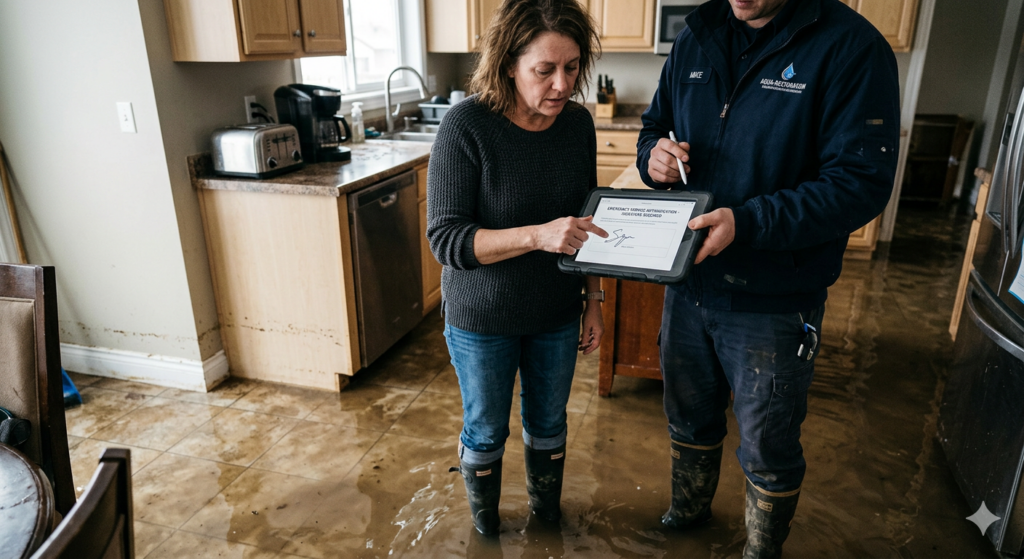
Step 3 — The Work Gets Done, the Bill Gets Inflated The crew dried your home and left. You assumed insurance would cover it. Weeks later, the contractor sent an invoice to your carrier.
That invoice was often padded with:
- Line items for work that may never have happened
- More equipment than IICRC S500 standards allow
- More drying days than moisture readings support
Step 4 — But Who Was Watching Them?
.This is the question no one asks until it is too late: who’s watching the crew? And more importantly, who’s watching the company as they write their predatory estimate?
While they worked in your home, did you:
- Verify every piece of equipment was actually placed and running?
- Confirm how many air movers and dehumidifiers were used, and for how many days?
- Receive daily psychrometric logs showing moisture readings and drying progress?
Almost certainly not. That is not an accident.
Predatory contractors count on homeowners being overwhelmed and trusting. They know you are not going to audit their equipment count. They know the insurance adjuster will not show up on-site either.
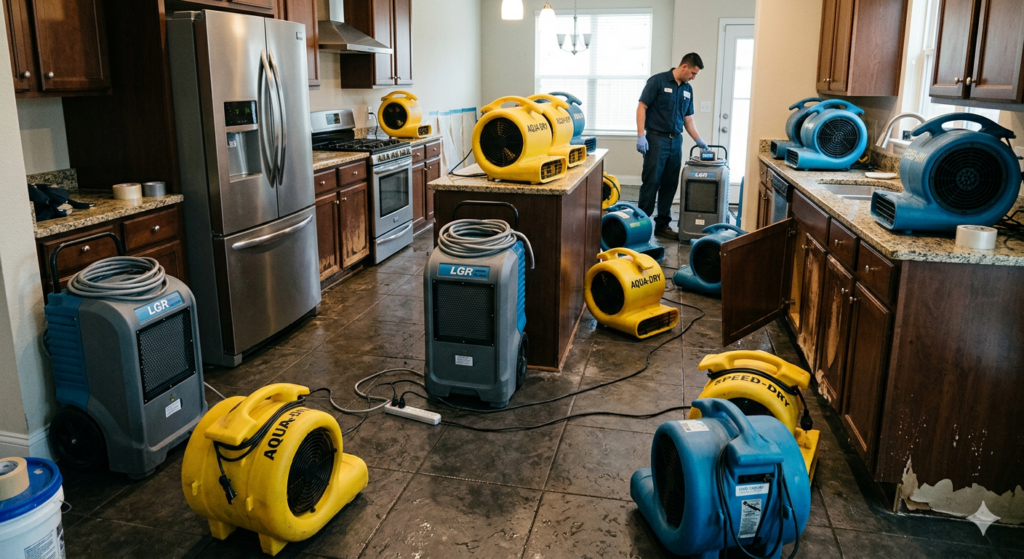
That window of unsupervised access is exactly where the inflation happens.
Some of these companies have built their entire business model around this: file an inflated invoice, collect partial payment from the carrier, then go after the homeowner for the rest using a mechanics lien. This is not a billing dispute. It is a predatory revenue strategy — and it targets California homeowners every day.
Before you pay anything: Google the contractor’s name alongside words like “lawsuit,” “lien,” or “complaint.” Multiple court records and BBB complaints are not a coincidence. They are a pattern. Ethical contractors do not make their money filing liens against the homeowners they were hired to help.
A lien does not mean you owe the money. It means they filed paperwork. Those are very different things.
Step 5 — The Insurance Company Pays Only a Fraction Your carrier reviewed the invoice and paid what they considered reasonable, and won’t ever pay any inflated mitigation contractor’s estimate — often 50 cents on the dollar, sometimes less. The contractor accepted that payment, then turned directly to you for the rest. That gap was built into their plan from the start.
Step 6 — The Lien The first notice many homeowners receive is a mechanics lien — recorded at the county, attached to their home’s title, for tens of thousands of dollars.
With a lien on your property, you cannot:
- Sell your home
- Refinance
- Clear the title without resolving the debt
It all started because you trusted your plumber’s referral.
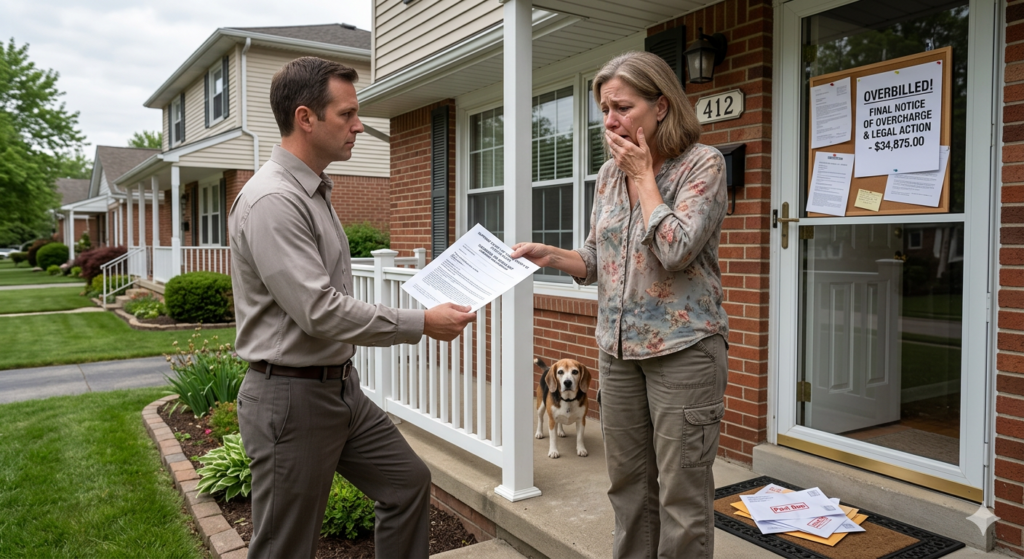
You can’t sell your home. You can’t refinance. You can’t clear the title without resolving the lien. And it all started because you trusted your plumber’s referral.
What looks like a billing dispute is, in many cases, the final step in a process that was designed to end exactly this way — with a lien on your home and a demand for money you never agreed to pay for work you cannot verify was ever done.
What You Need to Know
This is not a random billing error. The National Insurance Crime Bureau (NICB) has specifically warned California homeowners about this scheme.
The California DOI warns against signing any document you have not read in full — especially work authorizations with personal liability clauses.
Under the California Business and Professional code a home improvement contract must meet strict written disclosure requirements. A document signed on a tablet under pressure, with hidden terms and blank line items, may not be legally enforceable.
And here is the key point: your insurance policy requires your carrier to pay for reasonable and necessary mitigation work. If the carrier underpaid a legitimate bill, that is disputable. But if the invoice itself was inflated beyond IICRC S500 standards, the carrier’s partial payment may actually be closer to the real cost — and the lien may represent a fraudulent balance being collected from the most vulnerable person in the deal: you.
You Are Not Powerless. You Are Not Alone.
As a licensed California public adjuster, we work only for you — not the insurance company, not the contractor, and certainly not the plumber who started this chain of events.
The insurance company has a team of adjusters protecting their bottom line. The mitigation contractor has lawyers and a business model built around collecting from homeowners who don’t know they have options.
You should have someone in your corner too. Call Adjust Right!
Contact us today! 714-345-7928
If a mitigation contractor or pack-out company has placed a lien on your home — or threatened to — contact us immediately. Time limits apply to both lien disputes and insurance claim appeals. The sooner you act, the more options you have.
[Contact Us Today] | Free Claim Review | Licensed California Public Adjuster